Be Bold With Your Thoughts: On Criticizing Your Darlings
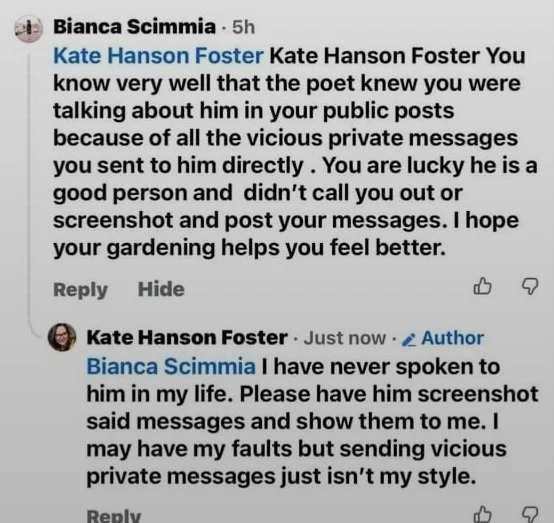
*Bianca Scimmia, internet rando and fabulist, definitely NOT a humorless cultist.
This comment I got on my (week-old) post today is really bothering me. I have been called a lot of names this past week for having an opinion on another man's poetry (mostly from women, which is interesting and disappointing), and it's okay, I can take criticism. What I don't like is a blatant lie posted publicly for the sake of making me into some kind of supervillain for daring to have an opinion of someone's poetry. I do not know the poet I was referencing personally. We have never interacted. I do see his poetry in my feed all the time and have developed an opinion on it. I have never messaged him ever. Nor would I for "vicious" purposes. As I said above—that's just not my style.
I have been reading, writing, and critiquing poetry my entire adult life. I love talking about poetry I love, and poetry I don't love. Because I can. Because it's interesting. I don't subscribe to the mentality of "If you don't like it, just keep scrolling." That's so boring. That is why** Michael and I started Table For Deuce. It started as a podcast where we hash out the nuances of our own opinions, read deeply into poems, and discuss them. We give every poem, whether we like it or not, our full attention. But we also have a publishing platform called The Seat. And for every poem we accept, we write a 300-500 word editorial on why we accepted it. All of this is to say, I spend a lot of time thinking about poems, how they exist and converse with the world, the purpose they serve, and so on.
Poets have also been negatively critiquing their contemporaries forever. Ezra Pound famously called Amy Lowell's poems "Amygism" because he felt she took over the imagist movement he helped to start. John Keat's wrote, "We hate poetry that has a palpable design upon us." He wanted the poet to disappear into their own experience rather than display inherited literary mannerisms. Ezra Pound is probably one of the most well-known critics of derivative poetry and what he felt was recycled literary language, calling some poems "Diluted Milton" or "second-handed Keats".
My opinion on a poet and his brand of poetry last week (albeit snarky), I did believe was going to stay in the realm of a "vague-book" rant, knowing that those who would get the reference were people who have privately shared the same opinions. The fact that the poet identified himself and proceeded to post endlessly about my "attack" as a way to plug his book, or that an opportunist poet (who I am not friends with) decided to publicly name him on my post for the purpose of stoking flames and enhancing his own poetic profile is really not my responsibility or mess to clean up.
This is the last I will say on this matter. But not the last of me expressing my thoughts and opinions on poetry. This art has taken so much from me…my opinions are all I have. And the people who know my heart know that I am not the monster this man and his army of followers want to make me out to be.
Keep reading, writing, and don't be afraid to be bold with your thoughts. There's no sense in living safe in your art for the sake of connections, publication opportunities, or a perceived sense of fame. We need interesting and nuanced voices more than ever.